
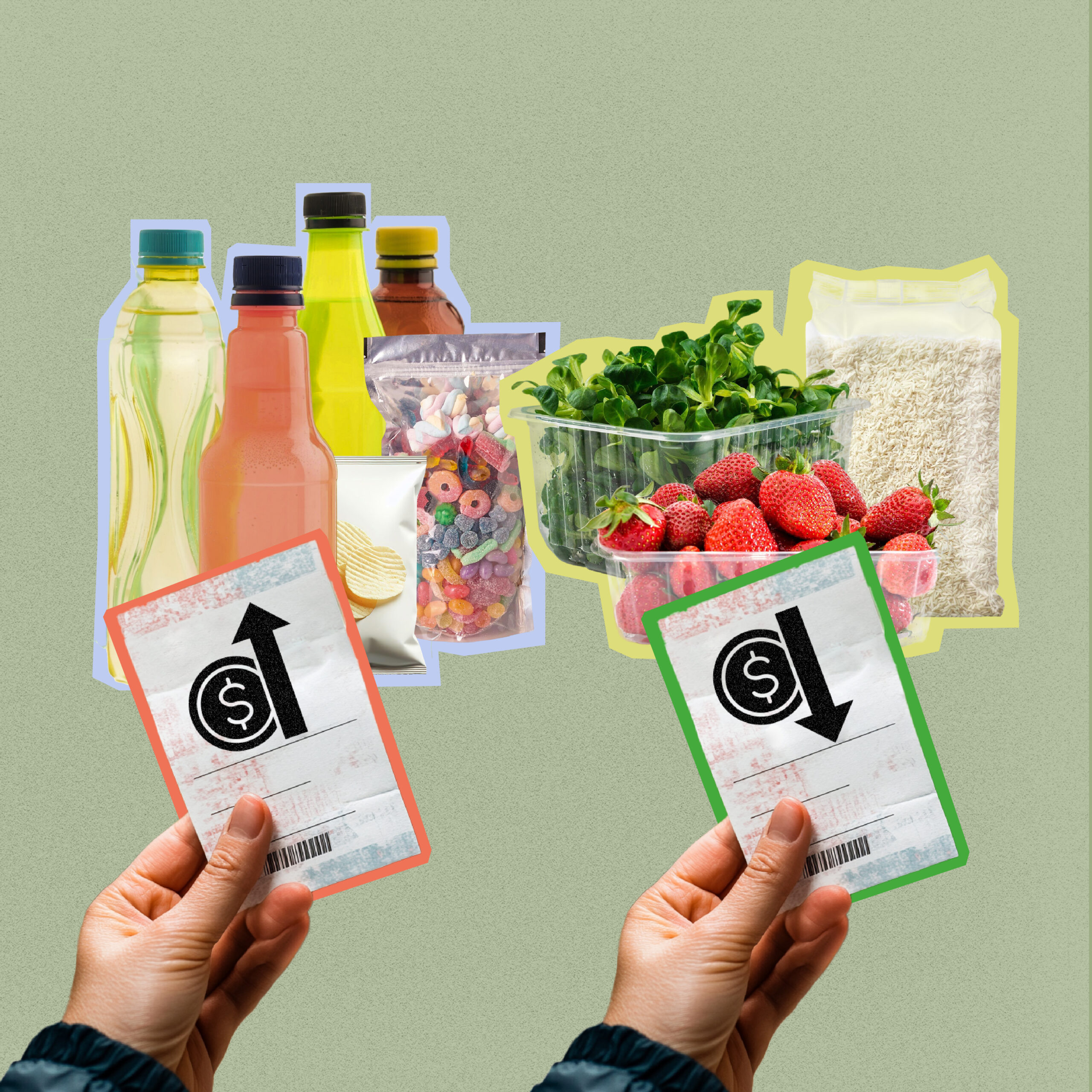
What can be learned from others about fiscal policies for healthier diets? What can be learned from others about fiscal policies for healthier diets?
Policy Snapshot
As part of a broader national tax overhaul, Brazil created a tiered structure for food taxation:
- 0% tax: Basic food basket items and fresh horticultural products
- 60% reduced tax: Minimally processed horticultural products and nuts, oils and flours (including socio-biodiversity items)
- Selective Tax: Products deemed harmful to health or the environment
Though framed as tax reform, the exemptions and reduced rates function as an indirect subsidy for healthier foods.
Policy Timeline
2023: A fiscal reform bill finally passes
- After decades acknowledged as a policy priority, and with prior bills drafted but never advanced, Congress passed the reform, replacing overlapping consumption taxes with a dual VAT system.
- Alongside the VAT, the reform created a new Selective Tax on goods harmful to health or the environment.ultra-processed foods. The Lancet Regional Health – Americas. 2026;55.'>
- As the bill moved through the Senate, the Reforma Tributária 3S coalition—a group of more than 100 public health, environmental and social justice organizations including Abrasco, ACT Promoção da Saúde and Idec—pushed to include both sugary beverages and ultra-processed foods broadly under the Selective Tax, and to keep ultra-processed products out of the reduced tax rates.
2024: Ultra-processed foods excluded from bill
- Physicians, former Health Ministers and civil society organizations signed a public manifesto calling for ultra-processed foods broadly to be added to the Selective Tax.
- Industry groups ran a parallel public opinion campaign arguing the tax would raise prices on everyday foods and hurt low-income Brazilians; for example, supermarket, food and beverage sector lobbyists met with government officials 69 times in 2023 alone in attempts to shape the reform.
- Ultra-processed foods were excluded from the bill sent to Congress in April 2024, though sugary beverages were included.
December 2024: Sugary drinks face a late threat
- The Senate briefly voted to remove sugary beverages from the Selective Tax, but the Chamber of Deputies restored them.
2025: Some rates and categories finalized
- A Complementary Law set the zero and reduced rates and defined Selective Tax categories (tobacco, alcohol, sugary beverages, etc.). Selective Tax rates are pending separate legislation as of mid-2026.
Key Success Factors
- The zero-rate food basket centers on ten official food groups of fresh, minimally processed essentials that account for regional culture and tradition alongside health and sustainability, explicitly excluding ultra-processed products.
- The 60% reduced rate tier extends tax relief to a broader list of essential, minimally processed foods, widening affordability.
- Advocates successfully pushed sugary drinks under the Selective Tax, despite industry pressure.
Remaining Gaps
- Ultra-processed foods excluded from the Selective Tax, which researchers warn could keep these foods affordable and drive up consumption.
- The “healthy” basket isn’t fully healthy: One of the groups is “sugars, salt, oil and fats,” letting refined sugar qualify for zero-rate treatment alongside staples like rice and vegetables.
Additional resources:
See the Constitutional Amendment (2023, Portuguese), the National Basic Food Basket Decree (2024, Portuguese) and the Complementary Law (2025, Portuguese)
Read about food and beverage industry interreference in the tax reform process in ACT and Idec’s Big Food 2.0 dossier
Read a World Bank analysis on opportunities for the reform related to sugary beverages