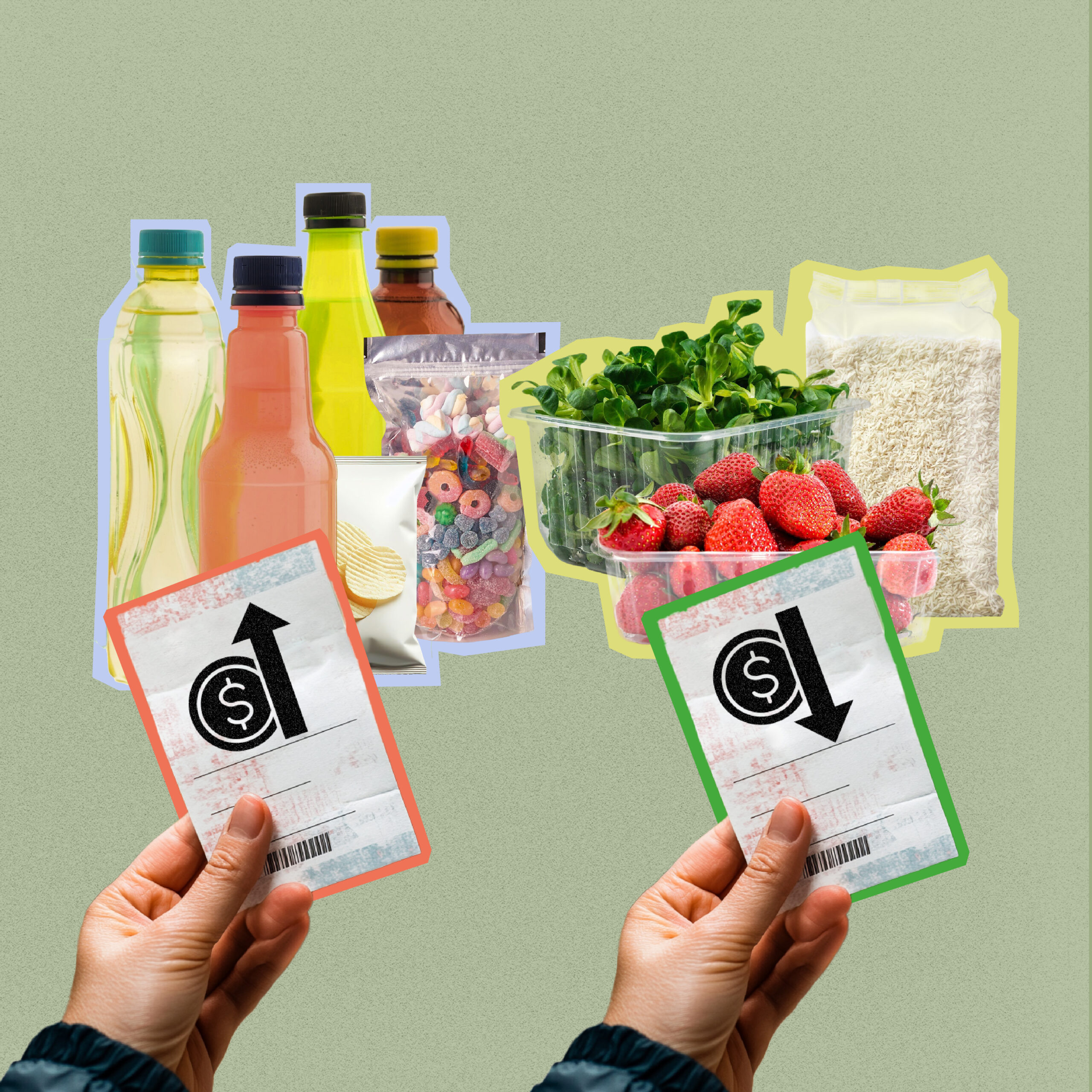
What are Fiscal Policies?
In many settings, current food markets are skewed toward the production and distribution of cheap, heavily marketed ultra-processed products, making it increasingly harder for consumers to access and afford healthier options. WHO recommends governments use fiscal policies—such as taxes on unhealthy products and subsidies on healthier ones—to correct this imbalance, raising the cost of unhealthy options while making nutritious ones more affordable.
What are Sweetened Beverage Taxes and Taxes on Unhealthy Food?
Taxing unhealthy products can cut consumption. Sweetened beverage taxes and taxes on foods high in fat, salt and sugar that are often ultra-processed—like confectionery, ready-to-heat meals and sweetened breakfast cereals—can raise prices and reduce demand. By making these health-damaging products less affordable, taxes help address their true cost to public health and the environment.
Revenue can fund public health and health equity goals. Tax revenue can support health and equity initiatives, including subsidies that make nutritious foods more accessible, particularly for lower-income populations. Evidence suggests that pairing taxes on unhealthy products with subsidies for healthy foods can create more equitable food environments.
Best Practice Recommendations
Effective taxes on sweetened beverages and unhealthy foods:
- Are developed free from conflict of interest
- Have a clear public health objective
- Increase the retail price enough to significantly reduce consumption
- Direct revenue generated to programs or services that improve public health and social protection, especially among communities most affected by poor nutrition
- Adjust rate based on inflation at least annually
- Establish a robust monitoring and enforcement process to assess consumer, industry and market response to the tax
Specifically sweetened beverage taxes should:
- Target all sweetened beverages, including those with nonsugar sweeteners and naturally occurring sugars (e.g. nectars, fruit juices)
- Apply to all sweetened beverage types, including liquid or powder concentrates, sweetened dairy-based drinks and packaged 100% fruit juices
- Be high enough to significantly reduce consumption. While the tax design will vary based on the context, research indicates that taxes that raise prices by 50% or higher can achieve the greatest health benefits.
- Apply a uniform volumetric excise tax (per liter or ounce) across all sweetened beverage types
Specifically unhealthy food taxes should:
- Include robust evidence-based thresholds for nutrients and ingredients of concern
Evidence
Learn how sweetened beverage taxes and taxes on unhealthy foods can improve public health. Click below to view the evidence page for more data.
A 50% price increase on sugary beverages globally could avert 2.2 million deaths over the next 50 years.
The Task Force on Fiscal Policy for Health. Health taxes to save lives: Employing effective excise taxes on tobacco, alcohol, and sugary beverages.
The same 50% tax increase on sugary beverages could generate US $328 billion in revenue over 5 years, nearly two-thirds of which would be raised in low- and middle-income countries.
The Task Force on Fiscal Policy for Health. Health Taxes: A Compelling Policy for the Crises of Today.
Sales of sugar-sweetened beverages fell by an average of 15 percent in 16 places where these taxes were implemented.
The Task Force on Fiscal Policy for Health. Health Taxes: A Compelling Policy for the Crises of Today.
After a tax on unhealthy foods was introduced in Hungary, households consumed 3.4% fewer processed foods and 1.1% more unprocessed foods.
Adopt This Solution
99 countries and smaller jurisdictions tax sweetened beverages:
- 82 national
- 17 subnational
24 tax foods or ingredients high in nutrients of concern:
- 22 national
- 2 subnational
Ready to join them by creating or strengthening an existing policy? Read the guide to adopting strong policies for sweetened beverage taxes and taxes on unhealthy foods, with links to practical tools and resources.
How can unhealthy beverage and food taxes be adopted?Case Studies
Learn from the experiences of countries and local jurisdictions that have successfully introduced policies to tax sweetened beverage and unhealthy food, including South Africa, Colombia and more.
What can be learned from others about unhealthy beverage and food taxes?What are fiscal policies for healthier diets?
Subsidizing healthy foods helps address affordability and availability gaps. Healthy food subsidies include government direct spending (e.g., cash transfers, voucher programs) and tax policies that support farmers in growing more nutritious foods and help consumers afford them. This makes fruits, vegetables and other healthy products more accessible, particularly for lower-income populations.
Evidence shows subsidies increase affordability and encourage consumption of healthy products—especially among populations facing the greatest price barriers. Pairing subsidies with taxes on unhealthy products creates more equitable food environments: taxes raise prices of unhealthy products while subsidies lower the cost of nutritious options
Best Practice Recommendations
Coming soon!
Evidence
Learn how healthy food subsidies can improve public health. Click below to view the evidence page for more data.
A 10% price reduction through subsidies on fruits and vegetables increases purchases by 6% to 8%.
World Health Organization: Fiscal policies to promote healthy diets guideline. Huangfu, et al. Impact of price reductions, subsidies, or financial incentives on healthy food purchases and consumption: a systematic review and meta-analysis. Andreyeva, et al. Evaluation of Economic and Health Outcomes Associated With Food Taxes and Subsidies A Systematic Review and Meta-analysis.
A 10% price reduction through subsidies on healthier foods increases consumption by 12-14%.
World Health Organization: Fiscal policies to promote healthy diets guideline. Afshin A, et al. The prospective impact of food pricing on improving dietary consumption: A systematic review and meta-analysis. Andreyeva, et al. Evaluation of Economic and Health Outcomes Associated With Food Taxes and Subsidies A Systematic Review and Meta-analysis.
Each 10% price reduction through subsidies on fruits and vegetables lowers body mass index by 0.04 kg/m²— small individually, but meaningful when applied across millions of people.
In Chile, projections show that taxes on unhealthy foods and beverages paired with removing taxes on healthier foods would lead households to purchase 5.3 kg more fruits and vegetables each month.
Adopt This Solution
Read the guide to adopting strong policies to subsidize healthier food options, with links to practical tools and resources.
How can fiscal policies for healthier diets be adopted?Case Studies
Learn from the experiences of countries and local jurisdictions that have successfully introduced policies to subsidize healthier food.
What can be learned from others about healthy food subsidies?