Fact Sheet
What is the evidence for sweetened beverage taxes and taxes on unhealthy foods? What is the evidence for sweetened beverage taxes and taxes on unhealthy foods?
Key Information:
- Taxes can help counter the rising availability and affordability of ultra-processed, unhealthy foods and beverages that have worsened global diets and increased rates of diet-related chronic diseases. Sweetened beverages are a major culprit.
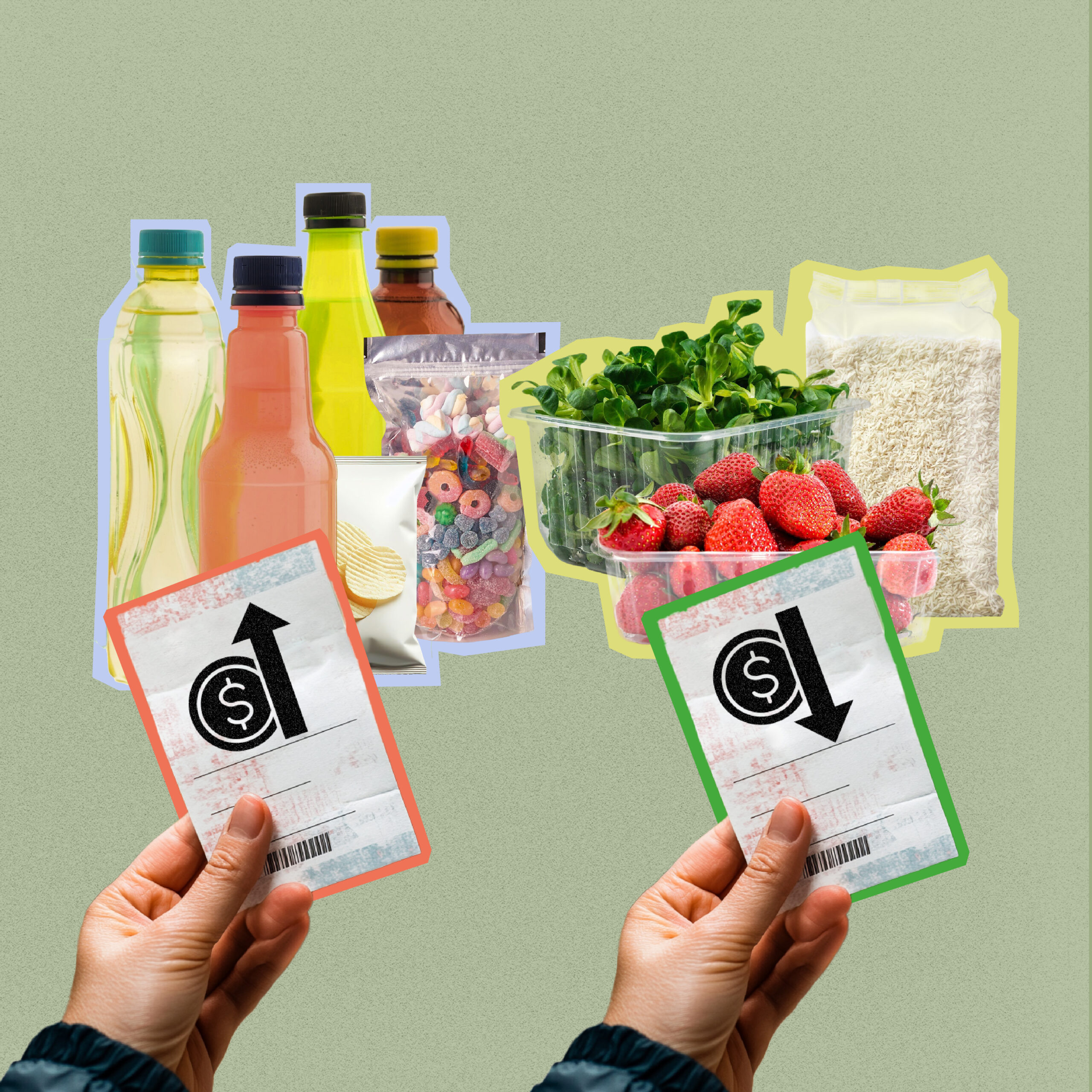
- Taxes can be used to raise the price of sweetened beverages and unhealthy foods to deter consumers from purchasing them. They should ideally be paired with policies to increase access to more nutritious options.
- The tax design should be broadly inclusive of products and should have a high enough rate to significantly influence consumption.
- Lower-income populations are poised to receive the greatest long-term health and economic benefits, particularly when tax revenue supports affected communities.
- Using revenue earned from taxes to advance public health goals—including those focused on health equity—is helpful in garnering public support for the policy.
This page provides global evidence and guiding questions to help collect local evidence. Where resources are limited, global, regional and comparable-country evidence may be used.
Food and beverage affordability influences people’s purchasing decisions. To promote healthier diets, WHO recommends fiscal policies, such as taxes that raise the relative price of sweetened beverages and unhealthy foods high in nutrients and ingredients of concern (e.g., fat, salt and sugar) that are often ultra-processed, as well as subsidies and other strategies that lower prices of healthier foods and increase their availability. Increased prices from taxes can deter consumers from purchasing products.
- A systematic review of 35 studies with more than 20,000 participants found that economic interventions showed the most promise for changing food purchasing behavior, with 8 of 9 studies in real stores and all 6 studies in simulated environments detecting effects on purchasing.
- Emerging evidence shows that combining subsidies and taxes leads to healthier food choices, especially for people with lower incomes.
The nonneutral market for unhealthy foods and beverages
Markets often favor the food and beverage industry through policies including agricultural subsidies on ingredients commonly used in ultra-processed products; tax exemptions; and trade policies such as preferential agreements and free trade zones. These policies tend to lower the costs of ultra-processed products while leaving healthier whole foods at a disadvantage, creating a market environment that favors less nutritious options.
For example, in the United States, producers of corn and soybeans—primary ingredients in processed foods and sweeteners—received $5.1 billion in direct subsidies in 2024, while producers of fruits and vegetables receive minimal support and are not eligible for direct subsidies. Similarly, major sweetened beverage producers in Brazil avoided approximately 4 billion reais (roughly US $700 million) in taxes through benefits in the Manaus free trade zone.
These policies can undermine healthy food subsidies, health taxes and other fiscal measures aimed at improving public health.
99 countries and smaller jurisdictions tax sweetened beverages - 82 national
- 17 subnational
Source
Global Food Research Program at UNC-Chapel Hill. Maps: Food and beverage taxes. 2025 June
Note: These counts are lower than the World Health Organization’s because they exclude countries that tax plain package water at a similar rate to sweetened beverages.
24 tax foods or ingredients high in nutrients of concern - 22 national
- 2 subnational
Source
Global Food Research Program at UNC-Chapel Hill. Maps: Food and beverage taxes. 2025 June
Guiding questions to collect local evidence:
- How available and affordable are fresh to minimally processed foods?
- How available and affordable are unhealthy foods?
- Does your setting tax unhealthy foods or beverages? See section: Which tax design would achieve optimal public health benefits?
Foods high in nutrients and ingredients of concern (e.g., fat, salt and sugar) that are often ultra-processed have become increasingly available and affordable, worsening global diets. High consumption increases the risk of diet-related chronic diseases such as Type 2 diabetes, cardiovascular disease and some cancers. Sugar-sweetened beverages are one of the leading sources of free sugar in diets.
Taxes can help offset the “true cost” these products impose on society, including health care, social care and environmental costs.
→Learn more about the “true costs” on Food Policy Hub’s problem page
- A ten-country study found that healthier diets cost more per day than less healthy diets.
- Between 2018 and 2023, worldwide sales of sugary beverages rose from 358 billion liters to 376 billion liters.
- In 79 out of 82 countries studied between 1990 and 2016, the cost of sugar-sweetened beverages as a share of income fell an average 9% annually in low- and middle-income countries and 2% annually in high-income countries.
- Global intake of sugar-sweetened beverages increased by 16% between 1990 and 2018, with increased consumption in all regions other than Latin America and the Caribbean and high-income countries.
- The World Health Organization recommends limiting consumption of *free sugar to less than 10% of total calories and ideally less than 5%. A small can (250 ml or about one cup) of a regular sugar-sweetened beverage alone can exceed the daily limit for adults and children.
- The most comprehensive review on the risks of ultra-processed products to date found that high consumption is linked to 32 harmful health effects, including a 50% higher likelihood of cardiovascular disease and 12% higher risk of diabetes.
- Consuming just one sugar-sweetened beverage per day increases the risk of Type 2 diabetes by as much as 25%.
Guiding questions to collect local evidence:
- What proportion of people’s diets consist of sweetened beverages and unhealthy foods?
- How does consumption vary by demographic group?
- What are the recent trends in consumption rates and sales?
- What are the rates of diet-related chronic diseases (e.g., overweight/obesity, Type 2 diabetes, cardiovascular diseases and some cancers)?
- How do rates vary by demographic group?
- How have rates changed in recent years?
- What are the projected trends for the coming years?
Taxes on sweetened beverages can raise prices and decrease purchases, both directly through the price increase and by increasing awareness of health harms. These policies can decrease sugar consumption from beverages, lowering the risk of Type 2 diabetes and improving oral health.
The industry often responds by reformulating products with nonsugar sweeteners—which WHO advises against—supporting the case for taxing all sweeteners.
- More about why reformulation may not benefit public health: Global Health Advocacy Incubator’s position paper on sweetened beverage taxes
- More on the potential health harms of sweeteners: Global Health Advocacy Incubator’s Sweeteners: Potential Health Harms and Taxation
- A 10% increase in the price of sweetened beverages decreases demand between 8% and 15.9%.
- Sales of sugar-sweetened beverages fell by an average of 15% in 16 places where taxes were implemented.
- In 2014, Mexico implemented a sugar-sweetened beverage tax of 1 peso per liter (about a 10% volumetric tax). Between 2012 to 2016, purchases of taxed beverages dropped 37%, with the largest declines among lower-income consumers. Purchases of water and other healthier beverages increased after the tax.
- In 2018, South Africa implemented a sugar-sweetened beverage tax of about 10%. Purchases of taxable beverages dropped by an estimated 29%, with a 51% reduction in sugar from those beverages and greater declines among low-income households.
- A study of more than five million pregnant people in five U.S. cities with sugar-sweetened beverage taxes found a 41.4% decreased risk of gestational diabetes among other positive perinatal outcomes.
- Improvements in oral health outcomes—including reduced tooth extractions and dental carries—have been observed after the introduction of sugary beverage taxes in the UK, US and Mexico.
Guiding questions to collect local evidence:
If your country/city has a sweetened beverage tax:
- Has the tax been evaluated for its impact on purchases?
- Are there opportunities for additional evaluation studies?
If your country/city does not have a sweetened beverage tax:
- Are there opportunities to model the potential effects of implementing such taxes?
Emerging evidence shows taxes on unhealthy foods can reduce purchases and consumption of targeted products, as well as generate government revenue and raise awareness of healthy eating.
- In Hungary, a 2011 specific excise tax on ready-to-eat foods and beverages high in salt, sugar or caffeine led to a 3.4% reduction in purchasing processed foods and a 1.1% increase in purchasing unprocessed foods.
- The tax had a long-term effect: a second impact assessment found that most consumers reported sustained reduced consumption (59-73%) and some reported even lower consumption than in the first assessment (19-36%).
- Mexico’s 2014 tax of 8% on nonessential foods saw decreases in the volume of purchases of taxed products compared to a scenario with no tax. This was especially true for lower-income households.
- In the first year after implementation, purchases of taxed products decreased by 6% in households with middle-income status and by 10% in those with lower-income status, compared to projected purchase rates with no tax.
- Denmark introduced a tax on saturated fat in food in 2011, which was abolished just over a year later due to misleading negative media coverage. Research found that the tax resulted in a 4% reduction in saturated fat intake.
- A modeling study in Finland suggests that a sugar tax of €1/kg would lead to about a 13% reduction in the incidence of Type 2 diabetes and a reduction in coronary heart disease incidence. Removing value-added taxes on fresh fish, fruit and vegetables was also projected to have a small positive effect on heart disease incidence.
- A modeling study in The Philippines found a 20% tax on foods high in sodium or sugar could generate 2.37 billion Philippine pesos (about US$40.7 million) in health care savings over 20 years.
Guiding questions to collect local evidence:
If your country/city has an unhealthy food tax:
- Has the tax been evaluated for its impact on purchases?
- Are there opportunities for additional evaluation studies?
If your country/city does not have an unhealthy food tax:
- Are there opportunities to model the potential effects of implementing such taxes?
The primary objective of taxes on sweetened beverages and unhealthy food should be health related. Taxes should be designed to increase prices of targeted products and reduce purchases while preventing reformulation with unhealthy substitutions (e.g., replacing added sugar with nonsugar sweeteners), thereby reducing people’s intake of nutrients of concern. Ideally, taxes will be paired with policies that make healthier food and beverages more accessible and affordable, increasing intake of essential nutrients and water.
Key recommendations for sweetened beverage tax design*
- Use specific excise taxes based on volume
- Apply to all beverages containing sugar or sweetener (whether added or intrinsic)
- Be high enough to significantly reduce consumption. Research indicates that taxes that raise prices by 50% or higher can achieve the greatest health benefits.
For more information, view Global Health Advocacy Incubator’s position paper on sugar sweetened beverage coming (forthcoming)
*Many lessons from sweetened beverage taxes are transferable to unhealthy food taxes, though evidence is still emerging.
- Many countries (116) have a national excise tax on at least one type of sugar-sweetened beverage. However, many existing taxes are not designed with a public health objective. For example, 45% of countries also apply the tax to bottled water.
- A meta-analysis of 62 studies found that sugar-sweetened beverage taxes do raise prices as intended, but companies don’t pass the full rate on to shoppers. On average, only 82% of the tax gets added to the price consumers pay. This means a 10% tax only increases what people pay by about 8%, so higher tax rates may be needed to achieve the desired health impact.
- Most sugary drink tax rates worldwide have been low, raising prices by less than 10%.
- A modeling study found that a one-time excise tax that increases prices of sugar-sweetened beverages by 50% could prevent 2.2 million early deaths globally over the next 50 years.
- In 2016, six Gulf Cooperation Council countries implemented high taxes: 50% on carbonated soft drinks and 100% on energy drinks. In Saudia Arabia’s first year, soft drink sales dropped 41% and energy drink sales fell 58%. Soft drink sales were 35% lower than in neighboring countries that had not yet implemented the tax.
Guiding questions to collect local evidence:
If your country/city has a sweetened beverage tax or unhealthy food tax:
- Does the tax have a public health objective?
- Does it define taxable products inclusively and have a high enough rate to reduce consumption?
- Does it exempt healthier products like water?
If your country/city does not have a sweetened beverage tax or unhealthy food tax:
- What are the advocacy opportunities to introduce such a tax?
- Has there been policy discussion about implementing one?
- Are there supportive policymakers who could champion the issue?
Taxes on unhealthy food and beverages should be combined with efforts to make healthier options more accessible and affordable (e.g., subsidies for healthier crops or at the retail level). While taxes may be financially regressive in the short term—affecting lower-income people most—they become progressive over time through reduced health care costs, recouped productivity and health improvements, particularly benefiting lower-income populations who face higher rates of diet-related chronic diseases. Directing tax revenue toward equity programs can increase the tax’s effect on health and economic equity.
- A review of 20 studies on taxes on foods high in fat, salt and sugar found that lower-income households were more responsive to taxes and reduced their purchases of these products more than other groups.
- A study in three U.S. cities found that sweetened beverage taxes created net financial benefits of $5.3-16.4 million annually for lower-income communities through strategic revenue allocation, with these communities receiving far more in program funding than they paid in taxes.
- A study in Kazakhstan found that a sugar-sweetened beverage tax would provide greater net financial benefits to populations with lower income than higher income.
Guiding questions to collect local evidence:
- How do rates and risks of diet-related chronic diseases vary by sociodemographic background?
- Are there existing efforts to address unequal food access (e.g., subsidies or cash transfers for healthy food)?
Revenue from taxes can be used for public health goals, which is helpful for garnering public support for taxes. Specifically, revenue can be used to improve health equity by enhancing access to healthy food or funding other public services that primarily benefit populations with lower income.
- A one-time tax that raises sugary beverage prices by 50% worldwide would generate US $328 billion over five years and cut consumption by 60%. Low-and middle-income countries would receive the largest share of this revenue (73%).
- A meta-analysis on public opinion shows that 39–66% of people support sugar-sweetened beverage taxes. Support varies depending on how the tax is framed and how revenue will be used, with greater public acceptance when tax revenue is dedicated to health purposes.
- Seven U.S. cities with taxes on sugar-sweetened beverages collect an average annual revenue of US $134 million. Of this, 85% was used to support programs and services in communities that experience health inequities, discrimination and exclusion.
- In its first year, South Africa’s sugar-sweetened beverage tax raised ZAR 2 billion (US$140 million or around US$2.5 per capita), representing about 0.15% of total tax revenue for the 2018-2019 fiscal year.
Guiding questions to collect local evidence:
- In what ways could your country/city benefit from extra revenue?
- Are there any social programs that were stopped or paused due to lack of funding?
- What equity-driven programs exist (e.g., universal pre-K) and what could they achieve with more funding?
- What equity-driven programs could be developed if funding was available?
- Global Health Advocacy Incubator’s
- Position Paper: Sweetened Beverage Taxes Fiscal Policies for Public Health & Food Access (forthcoming)
- Sweeteners: Potential Health Harms and Taxation
- Task Force on Fiscal Policy for Health publications. 2024.
- The Global Food Research Program at UNC-Chapel Hill’s:
- The World Health Organization’s: