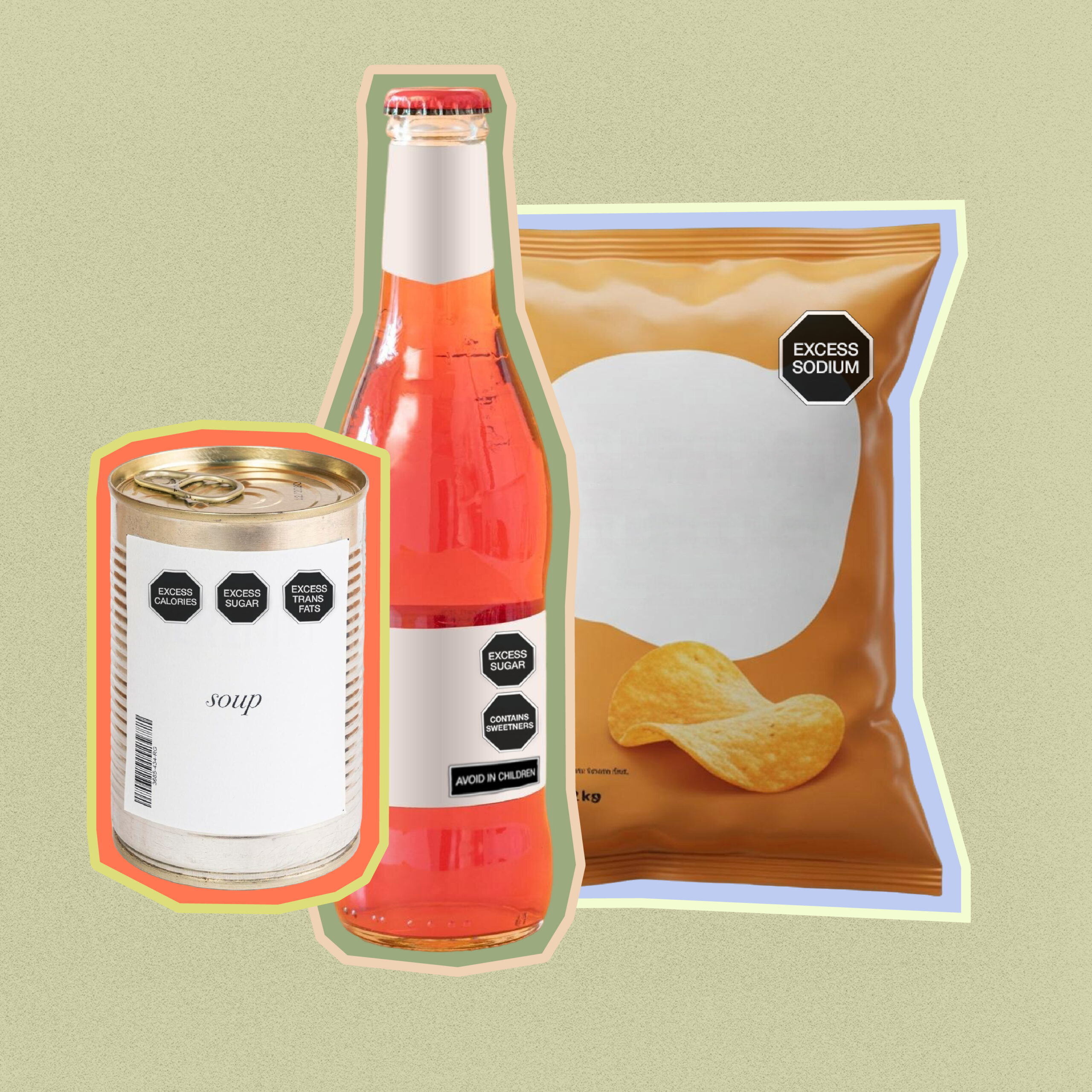
Case Study
What can be learned from others about front-of-package labeling? What can be learned from others about front-of-package labeling?
In 2016, Chile became the first country to introduce nutrient warning labels on processed foods and beverages as part of a comprehensive package to reduce childhood obesity that included marketing and school-based restrictions. The policy was phased in with increasingly strict nutritional criteria over time.
The Rigorous Research Process
Chile first proposed the UK’s traffic-light labeling system, but testing showed Chileans had trouble understanding it. A multidisciplinary team—public health experts, nutritionists, food labeling specialists, marketers and designers—joined forces to research a new approach. Steps included:
- Literature review—Expanded beyond food labeling to include alcohol and tobacco warning labels, which had stronger evidence bases.
- Focus groups—Women and adolescents from low-middle socioeconomic backgrounds provided feedback on text and design options in six groups.
- Experts consulted—A group of 50+ diverse experts refined prototypes, selecting 15 food warning label designs for quantitative testing.
- Two quantitative studies at point-of-sale
- Study 1: 600 women selected two top prototypes, which were displayed on yogurt and shown to 40 women at supermarkets in low-/middle-income Santiago neighborhoods. Participants completed surveys about understanding and purchase intentions.
- Study 2: 700 women identified which prototype performed better on outcomes including understanding and ability to shift purchase behavior. To assess performance among lower-income populations, 600 adolescents and women were interviewed at supermarkets in low-income neighborhoods.
The Winning Design
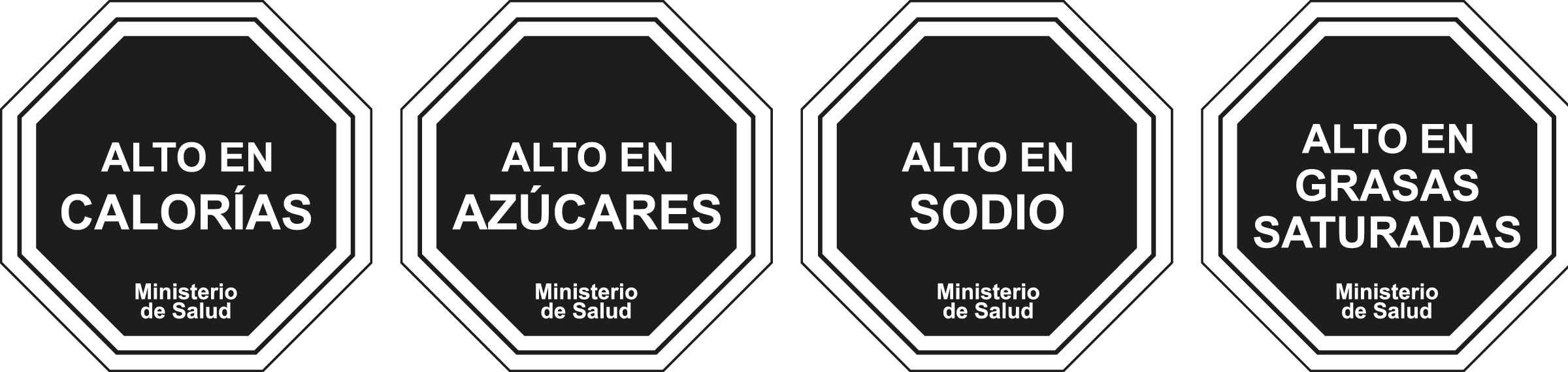
In 2016, Chile introduced the top-performing label: a black and white octagon that warned of high content of nutrients or ingredients of concern. Though “excess” tested better with consumers, the law’s wording required that “high in” be used instead. Other countries have since successfully used “excess.” Chile banned use of “high in” in positive marketing (e.g., “high in vitamins”) and launched a public campaign to explain the labels.
Global Influence
Chile’s model has been adapted in countries across Latin America and beyond.
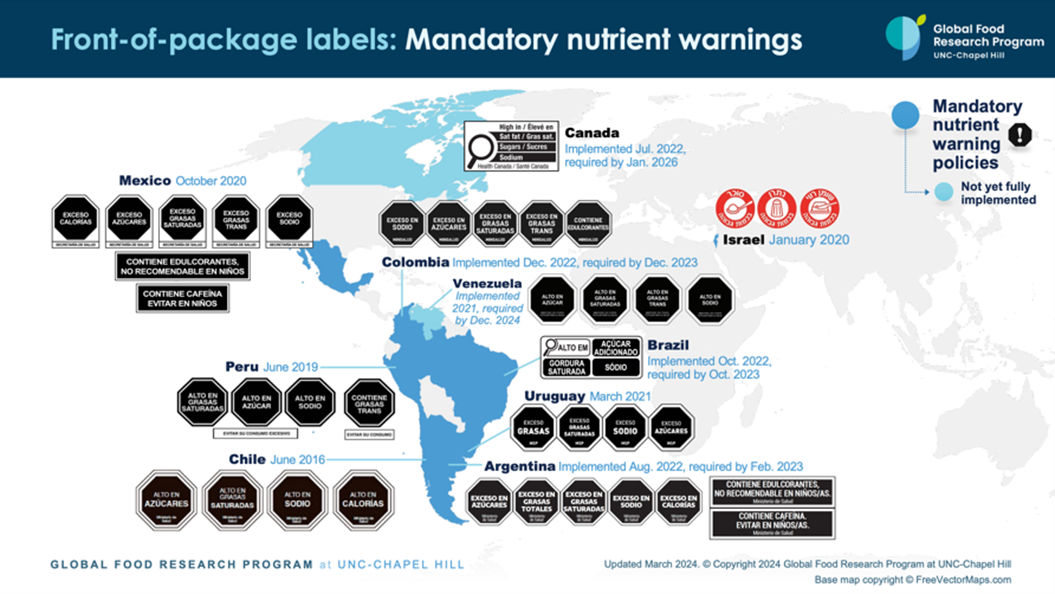
Source: Global Food Research Program at UNC-Chapel Hill. Maps: Front-of-package labels: Mandatory nutrient warnings.
Impact
Evaluations show Chile’s warning labels have successfully deterred unhealthy food choices and reduced purchases (See case study: How Chile Rigorously Evaluates Its Food Policy Law and Provides Critical Data for Other Countries)
Key Takeaways
- Nutrient warning labels use an evidence-based design adapted from alcohol and tobacco strategies, refined through expert consultation and rigorous testing with low-income populations.
- Successfully adapted across countries in Latin America and beyond, validating the model’s effectiveness.
- Sufficient evidence exists to support implementation when research resources are constrained, though local testing remains ideal.
Resources:
To learn more, read the paper that was summarized here: Reyes M, et al. Development of the Chilean front-of-package food warning label. BMC Public Health. 2019.
Learn more about research methods, tools and procedures to support the development of front-of-package labeling
Policy Snapshot
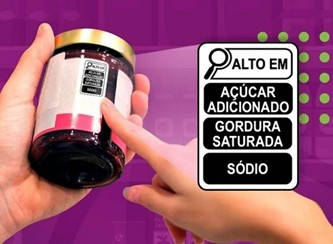
Brazil’s Health Regulatory Agency (ANVISA) approved mandatory front-of-package warning labels using a magnifying glass design for products high in sugar, saturated fats and sodium (October 2020, implemented October 2022).
Source: Global Health Advocacy Incubator. Brazil Implements Front-of-Package Warning Labels.
Key strengths
- Black and white “high in” labels placed on top of packages
- Focuses on ultra-processed products; excludes fresh and minimally processed foods
- Prohibits competing labeling models and nutrition claims for warned nutrients
- Standardized nutritional facts table with information per 100g/100ml
Remaining challenges
- Label size smaller than evidence recommended
- Nutrient profile model weaker than PAHO recommendations
- No warning labels for nonsugar sweeteners, likely leading to product reformulation with sweeteners
Advocates continue pushing for more stringent requirements, including a stronger nutrient profile model.
Policy Timeline
The Brazilian Alliance for Adequate and Healthy Eating (Aliança pela Alimentação Adequada e Saudável)—a coalition of civil society organizations and academics—was paramount in advancing front-of-package labeling in Brazil. The Alliance launched multi-faceted campaigns combining digital media, traditional media, earned media, influencer engagement and community activities at strategic points in the policy process.
2016: Regulatory Review Begins
Brazil’s Health Regulatory Agency (ANVISA) began reviewing nutrition label regulations, which food and beverage industry sectors tried to water down from the beginning. The Brazilian Institute for Consumer Protection (IDEC) ramped up advocacy efforts, building public support for clearer labels and recognizing the need for organized, consistent civil society action.
Industry Interference Throughout the Process
The industry created “Rede Rotulagem” (Labeling Network), a coalition that acted as its public face through social networks, events and evidence production with clear conflicts of interest. The industry participated in all stages of technical and political discussions, lobbied the President to appoint a favorable ANVISA director and used legal action to delay progress. It initially advocated for traffic-light labels, then pivoted to propose a magnifying glass design that was weaker than that which ANVISA proposed at the time.
2017: Setting the Agenda
The Alliance launched the “Right to Know” mass media and advocacy campaign, making the case for food warning labels and setting the policy agenda.
2018: Prompting Public Input
The campaign called for a public consultation, prompting ANVISA to initiate one in 2019.
2019: Record-Breaking Public Participation
ANVISA launched a digital campaign to encourage public participation. The consultation received a record 23,400 contributions. The agribusiness sector requested deadline extensions and argued the regulation would harm the economy.
2020: Final Push Amid Political Challenges
IDEC used judicial means to ensure completion of the regulatory process, filing a lawsuit to keep it moving forward. IDEC demonstrated the region’s front-of-package labeling advances and mapped out possible industry interference scenarios.
The Alliance launched a final advocacy campaign pushing ANVISA to make a decision.
The new regulation (RDC 429/2020) was approved in October 2020, calling for warning labels using a magnifying glass design.
Key Success Factors
- Strategic timing of campaigns at critical decision points throughout the multi-year policy process
- Coalition power uniting civil society organizations and academics to counter organized industry opposition
- Evidence-based advocacy free of conflicts of interest, demonstrating the problem and maintaining pressure on ANVISA for transparency
- Regional context highlighting advances in front-of-package labeling across Latin America to demonstrate feasibility and build urgency
- Sustained mobilization maintaining pressure from initial agenda-setting through implementation and beyond
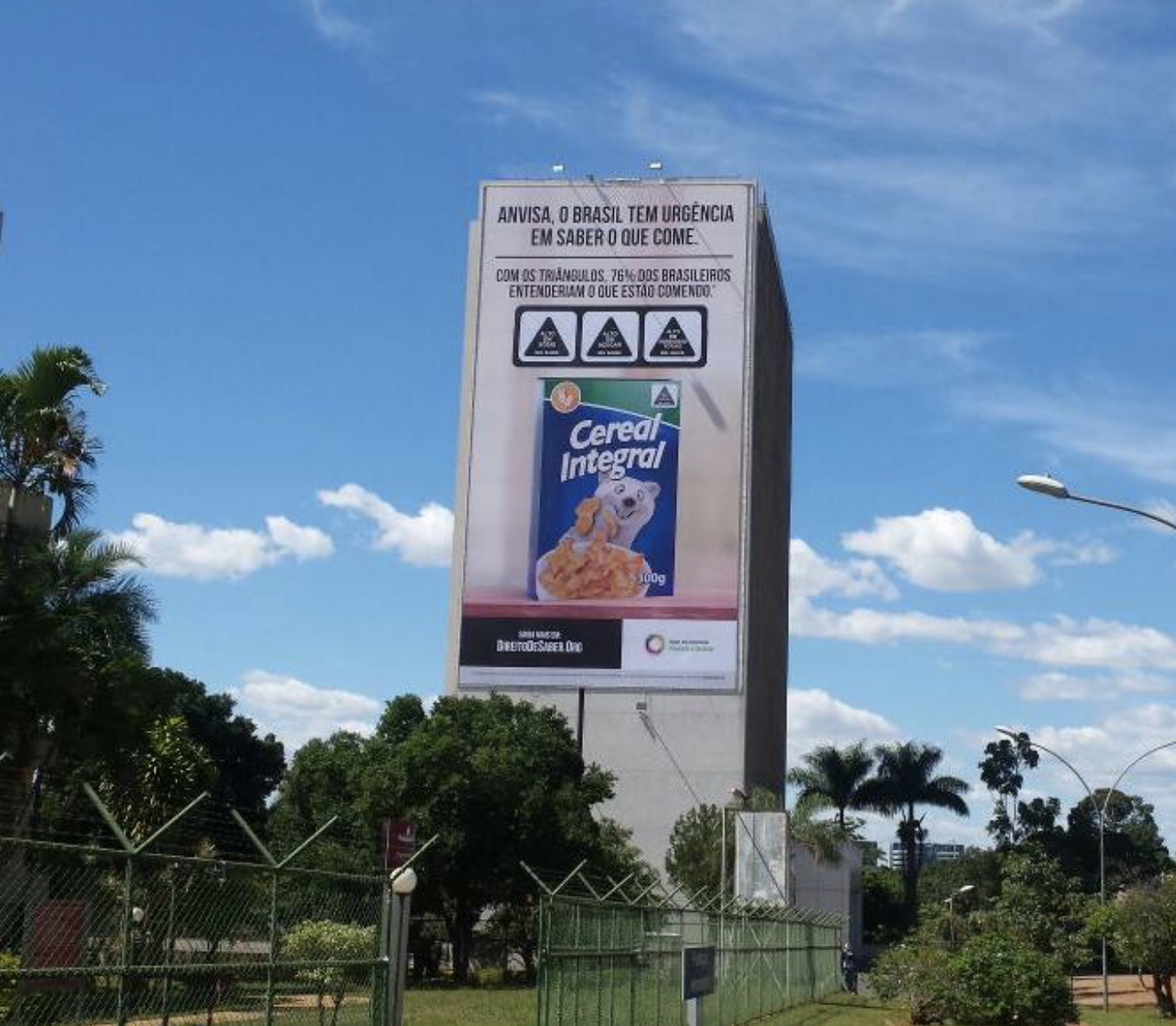
Source: IDEC/Aliança pela Alimentação Adequada e Saudável
Resources:
To learn more, read the case study and interview with the IDEC team that were summarized here:
- Vital Strategies. How Media Helped Build the Case for Front-of-Package Warning Labels in Brazil. 2021
- Global Health Advocacy Incubator. Brazil Implements Front-of-Package Warning Labels. 2022
Read about food and beverage industry interference in the policy process in English or Portuguese
View the regulation in Portuguese
Chile’s comprehensive food policy law—the first to include nutrient warning labels—has been rigorously evaluated, providing crucial evidence for policymakers worldwide.
Why evaluation matters:
- Shows stakeholders the policy is meeting its objectives
- Exposes gaps that can be addressed with stronger compliance or tighter restrictions
- Provides evidence for other countries making the case for similar policies
Evaluation Findings
Measuring Compliance (Process Evaluation)
After Phase 1 (2017): The Ministry of Health conducted more than 3,000 inspections at food distribution companies, supermarkets and schools. More than 70% of institutions complied with regulations; the Ministry sought penalties for the 30% that did not.
After Phase 3 (2020): Trained dietitians visited Chilean supermarkets to assess labeling compliance. They found 94% of products that should carry warning labels actually displayed them.
Measuring Behavior Change (Outcome Evaluation)
After Phase 1 (2017): A representative survey by the University of Chile found that 92% of people thought the labeling policy was good regulation. Among the 44% who compared food warning labels when shopping, more than 90% said labels influenced their purchasing decisions.
Researchers analyzed purchases from 2,381 Chilean households before (2015) and after the law. Compared to pre-policy trends, the nutrient content from high-in products purchased by households declined:
- 24% fewer calories
- 37% less sodium
- 27% fewer calories from sugar
After Phase 2 (2019): A follow-up study evaluated purchases from 2,844 Chilean households before (2013) and after phase 2. Using similar methods, researchers found that households bought fewer calories, sodium, sugar and saturated fat from high-in products with warning labels.
- 23% fewer calories
- 22% less sodium
- 37% less sugar
- 16% less saturated fat
Changes were more pronounced during phase 2 of the law and were similar across socioeconomic groups.

Nutrients and calories purchased during Phase 2 of Chile’s laws vs. hypothetical expected purchases with no policies. Source: Global Food Research Program at UNC-Chapel Hill. Front-of-package labeling to empower consumers and promote healthy diets. 2025. Original data from: Paraje G, Montes de Oca D, Corvalán C, Popkin B. Socioeconomic Patterns in Budget Share Allocations of Regulated Foods and Beverages in Chile: A Longitudinal Analysis. Nutrients. 2023 Jan 29.
Countering Industry Misinformation
The food and beverage industry has pointed to Chile’s rising obesity rates to claim warning labels haven’t worked. However, it can take many years for healthy eating interventions to reduce obesity rates at the population level.
This highlights the importance of:
- Setting policy objectives that are measurable in the near term (such as purchasing behavior changes)
- Clearly communicating to stakeholders what can and cannot be measured within certain timeframes
→ Learn about types of evaluations to measure policy adherence and impact
Key Takeaways
- Government-academic partnerships enabled comprehensive evaluation across compliance and outcome metrics
- Multiple evaluation approaches combining surveys, purchasing data analysis, and compliance inspections provided robust evidence from different angles
- Global influence as Chile’s rigorous evaluation data has been used by advocates worldwide to build the case for similar policies